
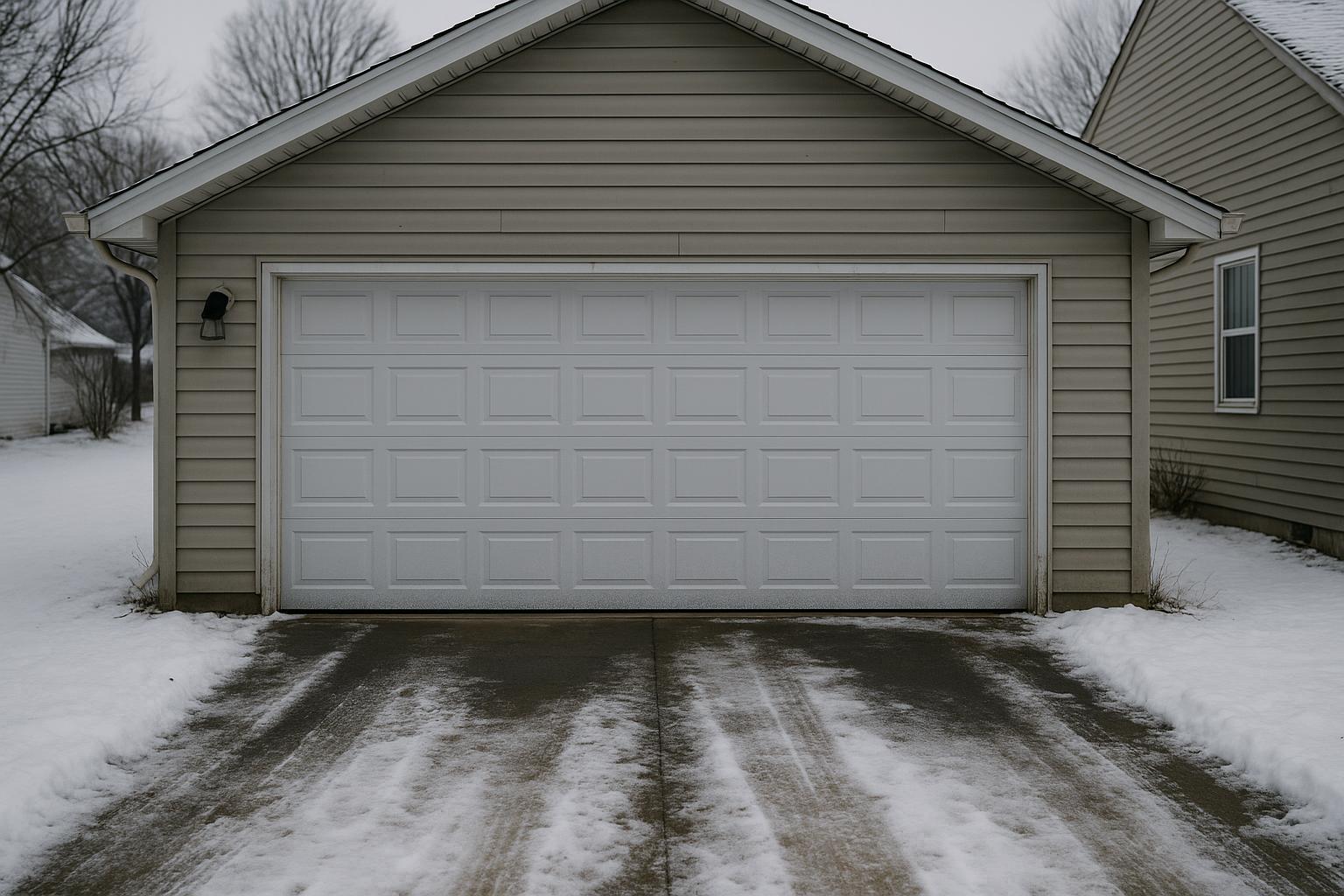
Winter and Your Garage Door: A Common West Bend Problem
If you've lived in West Bend for even one winter, you know how brutal the cold can get. Temperatures regularly drop well below freezing, and when they do, your garage door can become one of the first casualties. Few things are more frustrating than running late on a frigid morning only to find that your garage door refuses to budge.
The good news is that most winter-related garage door problems have straightforward causes and solutions. In this post, we'll walk you through the most common reasons your garage door won't open in cold weather, what you can safely do yourself, and when it's time to call in a professional.
1. The Weatherstripping Is Frozen to the Ground
This is the single most common winter garage door issue we see in West Bend and surrounding areas like Hartford, Slinger, and Jackson. The rubber weatherstripping along the bottom of your garage door is designed to create a tight seal against the floor, keeping out drafts, rain, and pests. But when temperatures drop and moisture is present, that seal can freeze solid to your garage floor or driveway.
When you hit the opener button, the door tries to lift but can't break free. In some cases, the opener motor strains against the frozen seal, which can damage the opener, the weatherstripping, or both.
What You Can Do
- Never force the door open. Repeatedly pressing the opener button while the door is frozen can burn out the motor or strip the gears.
- Use a heat gun or hair dryer to gently warm the bottom edge of the door where it meets the floor.
- Carefully chip away ice with a flat-edged tool like a putty knife, being careful not to tear the weatherstripping.
- Once the door is free, apply a silicone-based lubricant or cooking spray along the bottom seal to help prevent re-freezing.
2. Metal Components Have Contracted
Metal contracts in cold temperatures. Your garage door system is full of metal parts — springs, tracks, hinges, rollers, and the door panels themselves if you have a steel door. When everything shrinks slightly in extreme cold, parts can bind, tracks can become misaligned, and the overall system can feel sluggish or refuse to operate.
What You Can Do
- Apply a garage door-specific lubricant (not WD-40, which can actually attract dirt and grime) to the springs, hinges, rollers, and tracks.
- Check that the tracks are clear of ice, snow, or debris that may have blown in.
- If the door moves partway and then stops, the tracks may have shifted. This is a job best left to a professional.
3. Your Garage Door Springs Have Lost Tension
Cold weather puts extra stress on garage door springs. The metal becomes more brittle and less flexible, which means springs that were already nearing the end of their lifespan are more likely to lose tension or snap outright during a cold snap. If your door feels unusually heavy when you try to lift it manually, weakened springs are likely the culprit.
What You Can Do
Do not attempt to adjust or replace garage door springs yourself. These components are under extreme tension and can cause serious injury if handled improperly. If you suspect a spring issue, disconnect the opener and leave the door closed until a trained technician can inspect it. Our team at West Bend Garage Door Co handles spring replacements regularly and can typically get to you the same day.
4. The Opener's Batteries or Electronics Are Affected
Extreme cold can drain the batteries in your garage door remote much faster than usual. It can also affect the sensitivity of the opener's safety sensors, which are mounted near the floor on either side of the door. If those sensors get bumped, frosted over, or misaligned, the opener will refuse to close — or sometimes open — the door as a safety precaution.
What You Can Do
- Replace the batteries in your remote and wall-mounted keypad.
- Check the safety sensors near the bottom of the door tracks. Wipe away any frost, ice, or condensation and make sure both sensor lights are lit and steady.
- If the wall-mounted button works but the remote doesn't, the issue is almost certainly the remote's batteries or the remote itself.
5. The Garage Door Has Hardened Grease Buildup
Grease and lubricant that work fine in warmer months can thicken and harden when temperatures plummet. This creates resistance in the tracks, rollers, and hinges that can slow the door down or prevent it from moving altogether.
What You Can Do
- Clean old, hardened grease from the tracks using a rag and a mild degreaser.
- Re-lubricate all moving parts with a lithium-based or silicone-based garage door lubricant designed for cold weather.
- Make this part of your fall maintenance routine so you're prepared before the first freeze hits.
Preventing Winter Garage Door Problems
The best way to deal with winter garage door issues is to prevent them in the first place. Here are a few proactive steps West Bend homeowners can take before the cold season arrives:
- Schedule a fall maintenance appointment. A professional tune-up includes lubrication, spring inspection, track alignment, and a full safety check — everything your door needs to perform reliably through winter.
- Replace worn weatherstripping. If the rubber seal along the bottom of your door is cracked, torn, or compressed flat, replace it before winter. A fresh seal keeps cold air out and is less likely to freeze to the ground.
- Keep the area around the door clear. Shovel snow and clear ice from the base of the door regularly. Standing water that refreezes overnight is the primary cause of frozen weatherstripping.
- Insulate your garage. An insulated garage door and insulated garage walls help maintain a more stable temperature inside, reducing the strain on your door's components and keeping your home more energy efficient.
When to Call a Professional
Some winter garage door problems are easy to handle on your own. Swapping out remote batteries, clearing ice, and applying lubricant are all safe DIY tasks. But if your door still won't open after troubleshooting, if you hear a loud bang from the garage (a sign of a broken spring), or if the door is visibly off its tracks, it's time to call in a pro.
At West Bend Garage Door Co, we provide emergency garage door service throughout West Bend, Kewaskum, Germantown, and the surrounding communities. We understand that a garage door that won't open in the dead of winter isn't just an inconvenience — it can leave your home exposed to the elements and compromise your security.
If your garage door is giving you trouble this winter, don't wait for the problem to get worse. Contact us today to schedule a repair or maintenance visit, and we'll make sure your door is ready to handle whatever Wisconsin weather throws at it.