
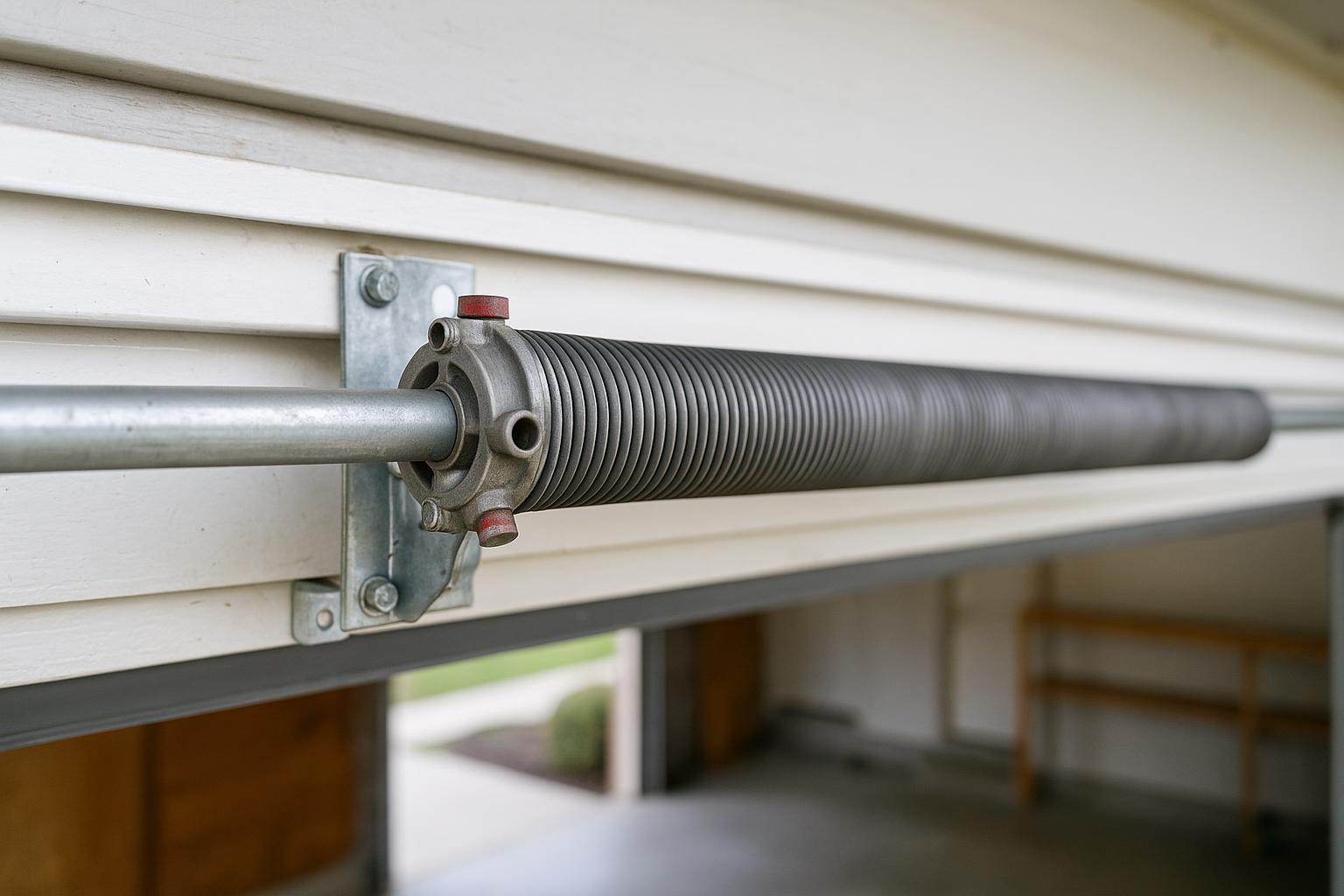
Your Garage Door Springs Are Doing More Work Than You Think
Every time you open and close your garage door, the springs are doing the heavy lifting — literally. A standard residential garage door can weigh anywhere from 130 to 350 pounds, and without properly functioning springs, your opener alone can't handle that load. Springs counterbalance the weight, making it possible for the door to glide up and down smoothly dozens of times a day.
But like any mechanical component under constant stress, garage door springs wear out over time. And when they fail, it's rarely convenient. A broken spring can leave your car trapped inside, your home unsecured, or worse — cause injury if it snaps while someone is nearby. For homeowners in West Bend and the surrounding communities, understanding when to replace your springs can save you from an unexpected and potentially dangerous situation.
How Long Do Garage Door Springs Last?
The lifespan of a garage door spring is measured in cycles. One cycle equals one full open and one full close of the door. Most standard torsion springs are rated for approximately 10,000 cycles, while high-cycle springs can last 25,000 to 50,000 cycles or more.
So how does that translate to years? It depends on how often you use your garage door:
- 2 cycles per day (once out, once in): A standard spring could last around 13-14 years.
- 4 cycles per day (typical for families): Expect roughly 7 years of use.
- 6-8 cycles per day (busy households, home businesses): Springs may wear out in as little as 3-5 years.
Wisconsin's climate also plays a role. The cold winters we experience here in West Bend cause metal to contract and become more brittle, which can accelerate wear on springs and increase the risk of breakage during the coldest months. If your garage is unheated, this effect is even more pronounced.
Torsion Springs vs. Extension Springs
There are two main types of garage door springs, and knowing which type you have can help you understand what to expect when it comes to replacement.
Torsion Springs
These are mounted on a metal shaft directly above the garage door opening. They use torque to lift the door and are the more common type found in modern residential installations. Torsion springs tend to last longer, operate more smoothly, and are generally considered safer than extension springs. Most homes in West Bend built or updated in the last couple of decades will have torsion springs.
Extension Springs
These run along the horizontal tracks on either side of the door and stretch to create the lifting force. They're more common in older installations and on lighter, single-car garage doors. Extension springs typically have a shorter lifespan and can be more dangerous when they break if they don't have safety cables installed.
Regardless of which type you have, spring replacement is not a DIY project. These components are under extreme tension, and improper handling can result in serious injury. Always call a qualified technician for spring work.
Warning Signs Your Springs Are Wearing Out
Springs rarely fail without giving some warning first. Here are the signs every homeowner should watch for:
- The door feels heavier than usual: If your garage door seems harder to lift manually, the springs may be losing tension.
- The door doesn't stay open: A properly balanced door should stay in place when opened halfway. If it slides down, the springs are likely weakening.
- Visible gaps in the spring coils: On torsion springs, look for gaps or separation between the coils. This is a clear sign the spring is stretched and nearing failure.
- The door opens unevenly: If one side lifts faster than the other, one spring may be more worn than its counterpart.
- The opener is straining: If your garage door opener sounds like it's working harder than normal or stops partway through a cycle, weakened springs could be forcing it to compensate.
- Rust on the springs: Corrosion weakens the metal and shortens the spring's lifespan. This is especially common in garages with poor ventilation or high humidity.
If you notice any of these signs, it's smart to schedule an inspection before the spring breaks entirely. A proactive replacement is always less stressful and less expensive than an emergency repair.
What Happens When a Spring Breaks?
When a garage door spring snaps, you'll likely know it. Many homeowners describe hearing a loud bang that sounds like a gunshot coming from the garage. After that, you'll find that your garage door won't open, or if it does, it will be extremely heavy and difficult to move.
A broken spring puts enormous strain on your garage door opener, which isn't designed to lift the full weight of the door on its own. Continuing to operate the door with a broken spring can burn out the opener motor, damage the cables, or cause the door to fall unexpectedly.
If a spring breaks, do not attempt to open or close the door. Disconnect the opener and call a professional. At West Bend Garage Door Co, we offer emergency service for situations exactly like this, because we know a non-functioning garage door can throw off your entire day.
Should You Replace One Spring or Both?
If your garage door has two torsion springs and one breaks, we strongly recommend replacing both at the same time. Here's why:
- The other spring is the same age. If one has reached the end of its cycle life, the other is close behind. Replacing both now saves you from a second service call in the near future.
- Balanced performance. New springs on both sides ensure even lifting force and smoother operation, which also reduces wear on your opener and other hardware.
- Cost savings. The labor involved in replacing springs is the same whether you do one or two. You'll save on the second service call by doing both at once.
Extending the Life of Your Garage Door Springs
While springs will eventually wear out no matter what, there are a few things you can do to get the most out of them:
- Lubricate regularly: Apply a silicone-based lubricant to your springs two to three times a year. This reduces friction, prevents rust, and helps the coils move smoothly.
- Schedule annual maintenance: A professional tune-up includes checking spring tension, inspecting hardware, and making adjustments that can extend the life of your entire garage door system.
- Keep the garage temperature moderated: If possible, insulating your garage can reduce the temperature extremes that stress metal components during our harsh Wisconsin winters.
- Consider high-cycle springs: When it's time for replacement, upgrading to high-cycle springs costs a bit more upfront but can double or triple the lifespan of your springs.
Trust the Local Experts in West Bend
At West Bend Garage Door Co, we've seen every type of spring issue imaginable — from springs that snapped in the dead of a January cold snap to springs that were installed incorrectly by a previous company. We serve homeowners throughout West Bend, Hartford, Slinger, Jackson, Kewaskum, and Germantown with honest assessments and quality workmanship.
If your garage door springs are showing signs of wear, or if it's been several years since they were last inspected, don't wait for a break to happen. Contact us today to schedule a spring inspection or replacement. We'll show up on time, explain your options clearly, and get your garage door working safely again.